Where Do Green Tea and Matcha Come From? Origin, History, and Regions
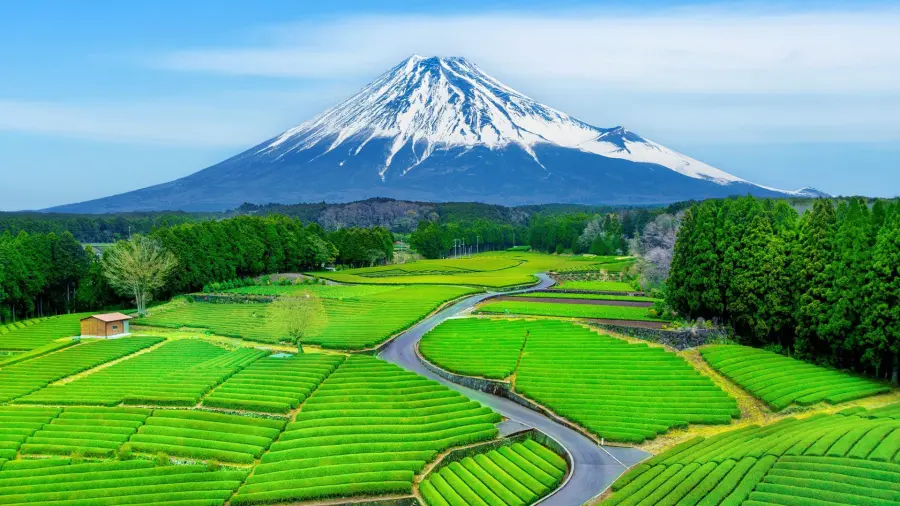
Where do green tea and matcha come from? Trace the history of Japanese tea from its origins in ancient China, to its spread across Japan and tea producing regions such as Uji in Kyoto.

Origins and History of Tea in Japan
In Japan, green tea (nihoncha, or Japanese tea) has become an indispensable part of daily life, and matcha is now widely enjoyed around the world. But where do these two types of tea come from?
Behind every cup of green tea or matcha lies an extraordinary history dating back to around 2700 BCE. A single plant, used as medicine in ancient China, was introduced to Japan and, as it became intertwined with the times, philosophies, and social structures of the country, evolved into the cornerstone of Japanese culture.
In this article, we explore the origins of tea and trace the history of green tea and matcha in Japan.
The Historical Evolution of Tea: From Ancient China to Modern Japan
| Period / Year | Location | Significant Development | Primary Tea Format |
|---|---|---|---|
| ~2700 BCE | China | It is said that Shennong recognized tea as a medicinal herb | Raw wild herbs |
| Late 2nd century | Tea is circulated as a traded commodity and luxury item | Dancha (compressed blocks) | |
| 760 CE | Lu Yu codifying Chinese tea culture by writing ‘Chajing’ (The Classic of Tea) | Formalized scholarly tea culture | |
| 815 CE | Japan | The offering of tea to Emperor Saga is recorded in ‘Nihon Koki’ (Later Chronicles of Japan) — the first written reference to tea in Japan | A rare luxury item in the imperial court |
| 12th century | Eisai introduces Chinese powdered tea preparation and drinking culture to Japan | Powdered tea (prototype of later matcha) | |
| Late 15th –16th Century | Shade-growing (oishita saibai) and tencha production techniques are developed | Tencha (raw material for modern matcha) | |
| 18th Century | The sencha production method is established by Nagatani Sōen, a tea farmer who lived in Uji | Sencha (Japanese green tea) |

Where Did Tea Come From? The Ancient Origin of Tea
Before diving into the origins and history of Japanese tea, it helps to start at the very beginning, with tea itself. The story of tea stretches back thousands of years to ancient China, long before it ever reached Japan’s shores.
In Chinese tradition, tea’s discovery is placed around 2700 BC, the founder of Chinese medicine and agriculture. The story goes that Shennong tasted hundreds of wild herbs, including tea leaves, to understand their medicinal properties.
Although this story has more elements of legend than historical fact, this origin story became widely known because Lu Yu, in his 760 CE work ‘The Classic of Tea’ – the world’s oldest specialized work on tea – wrote that “the practice of drinking tea began with Shennong”. Whether myth or memory, this early reference marks tea’s entry into human history.
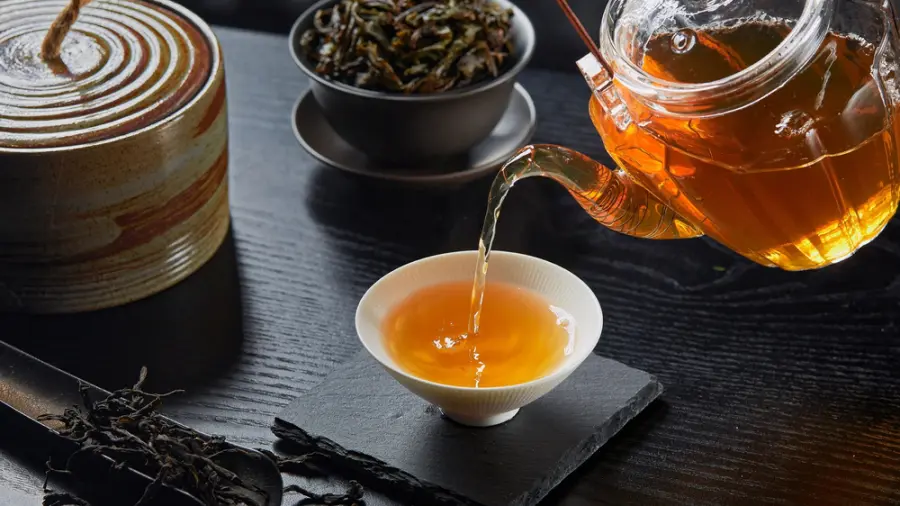
For nearly two millennia, knowledge about tea and ways of drinking it accumulated. By the latter half of the 2nd century, tea drinking had become an established practice in China, with tea leaves being bought and sold as a commodity.
During this period, tea leaves were processed into compressed, solid blocks called dancha, which made it well-suited for trade, and boiled together with other ingredients to make a beverage. The beverage was favored by the upper classes and considered a luxury item
During the Tang Dynasty (618–907), tea culture flourished and the custom of drinking tea — once limited to the upper classes — spread to the general population. At the time, tea was most commonly consumed in the form of what was known as “pressed tea”. Steamed tea leaves were compressed into solid cakes and dried, a format well-suited for transporting from production regions to other parts of the country.

The History of Tea from Ancient China to Japan
While tea culture was becoming increasingly refined in China, across the sea, Japan’s relationship began in the Nara and Heian periods (710 – 1185).
It is believed that at this time envoys to Tang China and Buddhist monks studying abroad brought back tea seeds and the custom of drinking tea along with Buddhist scriptures and institutional practices.
In 815 CE, the Nihon Koki records that the monk Eichu presented tea to Emperor Saga. This is considered the earliest written account of tea drinking in Japanese history. However, at this stage, tea was so precious that only a select few, such as monks and members of the nobility, were able to enjoy it.

The Origins of Japanese Tea and Matcha
For a long time in Japan, it was common to prepare tea by boiling tea leaves in water. The turning point came in the 12th century when Zen monk Eisai brought a different tea culture from China to Japan. Eisai had travelled to Song China on two occasions and observed the practice of preparing and drinking powdered tea at Zen monasteries.
Upon his return, Eisai authored Japan’s first specialized book on tea, Kissa Yōjōki (Treatise on Drinking Tea for Health), in which he expounded on the benefits of tea. The book also contains descriptions of tea production methods, detailing how in the Song Dynasty steamed loose-leaf tea was processed into powder.
With Eisai’s intervention, tea cultivation and processing in this way spread, beginning with priest Myoe planting tea at Kosan-ji temple in Kyoto then on to tea gardens expanded in the Kyoto area and beyond. Farmers would steam, dry, and ground the leaves without rolling them.
In the latter half of the Muromachi period (1450 – 1573), tea was channelled into ceremony with Murata Jukō developed wabi-cha, a style of chanoyu (tea ceremony). This tradition was carried forward by Takeno Jōō and Sen no Rikyū, who perfected the ceremony and cemented its association with serving whisked tea, spirituality, and Japanese aesthetics.
By the Edo period, the tea ceremony incorporated into the rituals of the shogunate and became an indispensable part of samurai society. Meanwhile, among the common people, a beverage culture rooted in daily life also began to shape, with the practice of brewing and drinking tea made from simply processed tea leaves.

How is Matcha Made? Shade-Grown Cultivation and the Evolution of Tea Culture
Across Japan, tea cultivation and processing techniques gradually developed under the patronage of temples and powerful local figures. In particular, the areas around Kyoto and the Kinai region, being the center of politics, religion, and culture, provided an environment where tea naturally became intertwined with rituals and personal tastes. Natural conditions-such as climate, rainfall, and well-drained soil-also played a key role in supporting the production of high-quality tea.
Against this backdrop, tea came to be regarded not merely as a beverage, but as a cultural entity linked to spirituality and aesthetic sensibilities. Under the patronage of the shogunate and the samurai class, teas of particularly high quality began to be highly valued, and tea produced in Uji was held in high esteem. The patronage of the Ashikaga shogunate was later continued by Toyotomi Hideyoshi, and Uji tea came to be regarded as the epitome of high-quality tea.
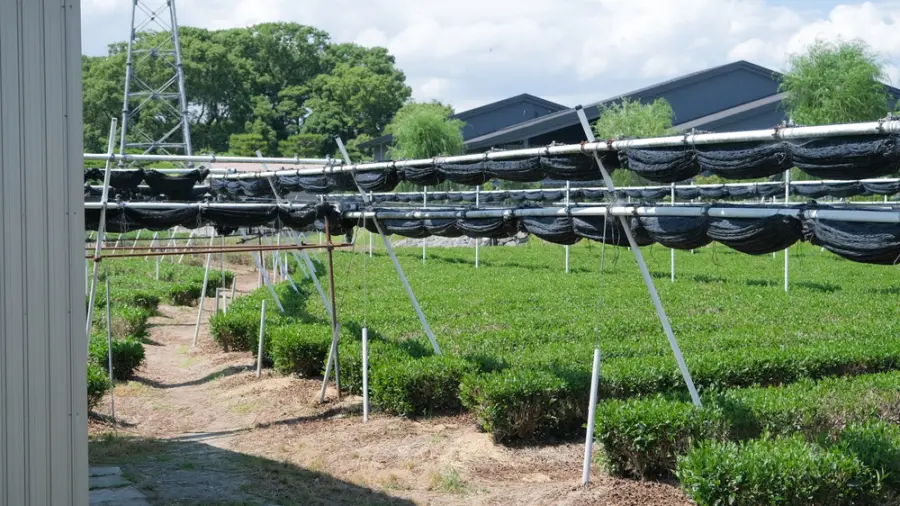
During the Azuchi-Momoyama period (1568 – 1600), the culture of the tea ceremony deepened and demands for the flavor and appearance of tea became even more stringent. In response to these demands, a cultivation method known as “shaded cultivation” — in which tea leaves are grown under cover to block sunlight — was established.
This shade-grown tea was incorporated into the previous processing method that created tencha with unrolled, steamed, and dried leaves. The result was a tea rich in umami and low in astringency, that when ground became matcha.
This matcha did not emerge suddenly in a single region; rather, it was the result of the accumulation of knowledge regarding tea cultivation and processing, refined within the culture of the tea ceremony.

The Evolution of Green Tea: Sencha and Gyokuro
In the mid-18th century, a farmer named Nagatani Soen revolutionized tea production with what became known as the Uji Seihou (Uji Method). His technique involved steaming fresh tea buds and hand-rolling them on a hoiro drying rack – a Japanese innovation that created sencha, a type of green tea exceptional in color, aroma, and flavor.
This new form of tea was highly regarded within the townspeople’s culture of the Edo period. Sencha gradually became established as an everyday beverage and spread throughout Japan. Today, most of the tea consumed in Japan is sencha, and it is considered the quintessential Japanese green tea.
The Uji Method became the foundation for modern Japanese tea production techniques and continued to be refined. Eventually, in the pursuit of higher-quality sencha, producers developed gyokuro by combining the method of hand-rolling with a shade-grown tea. By the late Edo period, gyokuro had come to be regarded as Japan’s most prestigious tea.
While matcha has been passed down primarily within the cultural context of the tea ceremony, sencha and gyokuro developed as part of a trend toward refining tea as a beverage.
Green Tea vs. Matcha: What is the Difference?
Both green tea and matcha are made from the same plant, Camellia sinensis. This single species – an evergreen shrub native to East Asia – is the source of all true tea, including the vibrant green matcha used in traditional Japanese tea ceremonies.
Although both green tea and matcha originate from the same tea leaves, they differ in how they are cultivated, processed, and consumed. A key characteristic of matcha is that the tea leaves are ground into a powder and consumed.
So, while matcha is a type of green tea, it has evolved independently in terms of cultivation, production methods, and usage and through its connection to the culture of the tea ceremony, it has come to symbolize the Japanese spirit. Green tea, on the other hand, has become deeply rooted in Japanese daily life as a common beverage.
Green Tea vs. Matcha: What is the Difference?Tea as Culture: Japan's Gift to the World
From the origins of tea drinking in ancient China, through its introduction to and development in Japan, the history of tea is one of cultural exchange and innovation. In Japan, tea has been refined in distinct ways across diverse social strata, including temples, samurai society, and merchant culture.
Whether it is matcha or sencha, behind every cup of tea lies cultivation techniques and tea – making innovations accumulated over time, as well as the philosophies and values of the people who have embraced them. Having developed uniquely in Japan, tea culture has now spread across the world, connecting people across regions and nations.